
Article Highlights
- Barrier doors are designed for airflow and insect protection, while security doors are built to provide stronger resistance against forced entry.
- A barrier door may suit low-risk areas such as protected patios, internal courtyards or secondary doors where security is not the main priority.
- Compliant security doors must meet Australian Standards, including testing for impact, pulling, cutting, corrosion and overall forced-entry resistance.
- Security doors offer stronger materials and locking systems, including reinforced frames, mesh retention tested to withstand tampering, tamper-resistant hinges, and 3-point locks.
- The right door depends on your home’s risk level, with security doors better suited to front entries, street-facing doors, rear access points, and coastal Perth homes that need long-term durability.
Is a barrier door enough to protect your home, or do you need a fully compliant security door?
Choosing the right screen door can feel confusing, especially when many products look similar at first glance. While security screens may seem simple, a safe and compliant product requires careful design, high-quality materials, and proper manufacturing standards.
Your front door plays an important role in protecting your home and family, so it is worth knowing what you are actually buying. In this guide, we explain the real difference between barrier doors and security doors, so you can choose the right level of protection with confidence.
What is a security door?
Security doors are designed to strengthen entry points and protect homes and businesses from unauthorised access. They are designed to make forced entry more difficult while also helping reduce the risk of break-ins, vandalism and other security threats.
What is a barrier screen door?
A barrier door is a lightweight, mesh-screened door that is great for keeping insects out whilst letting air flow freely. Barrier doors combine aesthetics with ventilation.
So, what’s the difference between barrier and security doors?
Security and barrier screen doors both offer defence and protection, but they differ vastly in purpose, design and installation. Below, we’ve laid out some of their key differences so you can be better informed about which option to use to protect your entranceways.
| Feature | Barrier door | Security door |
| Main purpose | Airflow and insect protection | Forced-entry resistance |
| Security level | Basic deterrent | Tested protection |
| Compliance | Not tested to security standards | Must meet Australian Standards |
| Locking | Single point lock | 3-point locking is mandatory. |
| Mesh | Flyscreen-style or light mesh | Stainless steel or perforated aluminium |
| Best for | Low-risk areas, ventilation | Front and side doors, vulnerable access points |
| Cost | Lower | Higher |
Main functions
Security doors are designed to maximise protection. They are pure safeguards, designed to resist forced entry and make break-ins significantly harder.
A standard barrier door is a blend of deterrent and convenience. It mainly acts as a visual deterrent, designed to keep insects, animals and small children out, but still allowing fresh air to flow through.
Materials
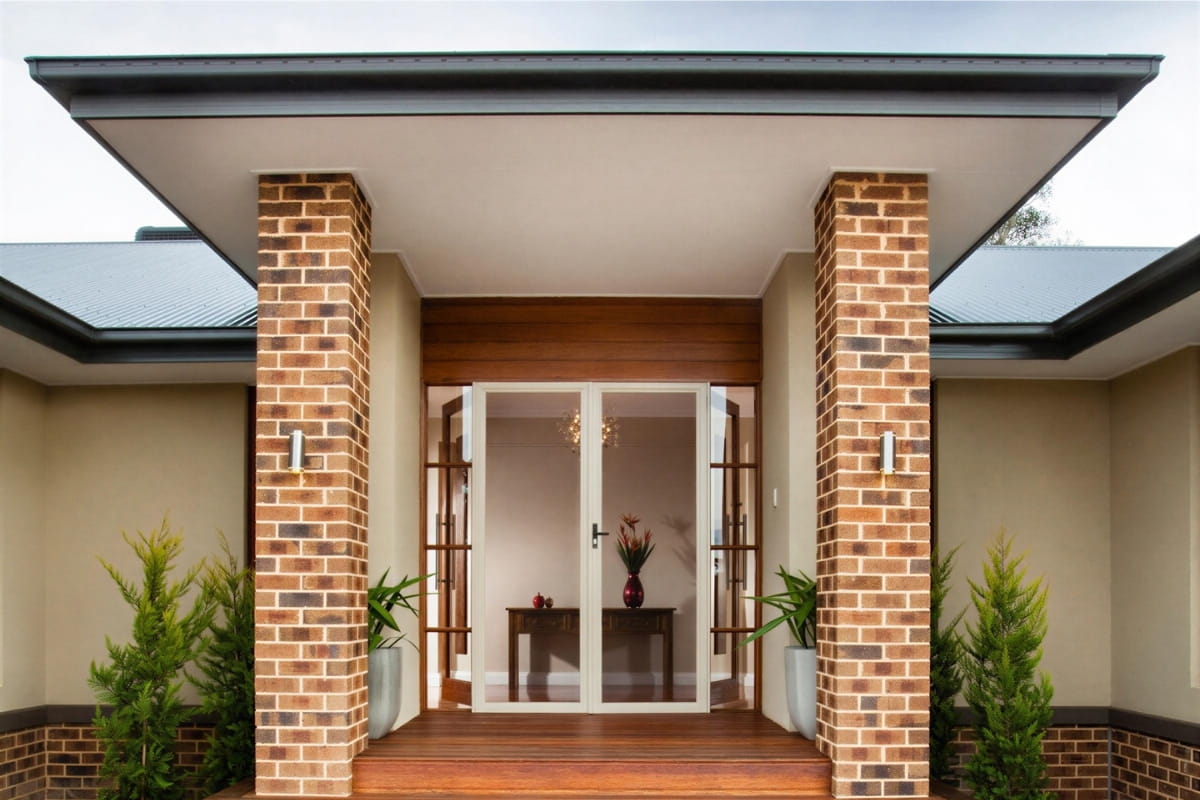
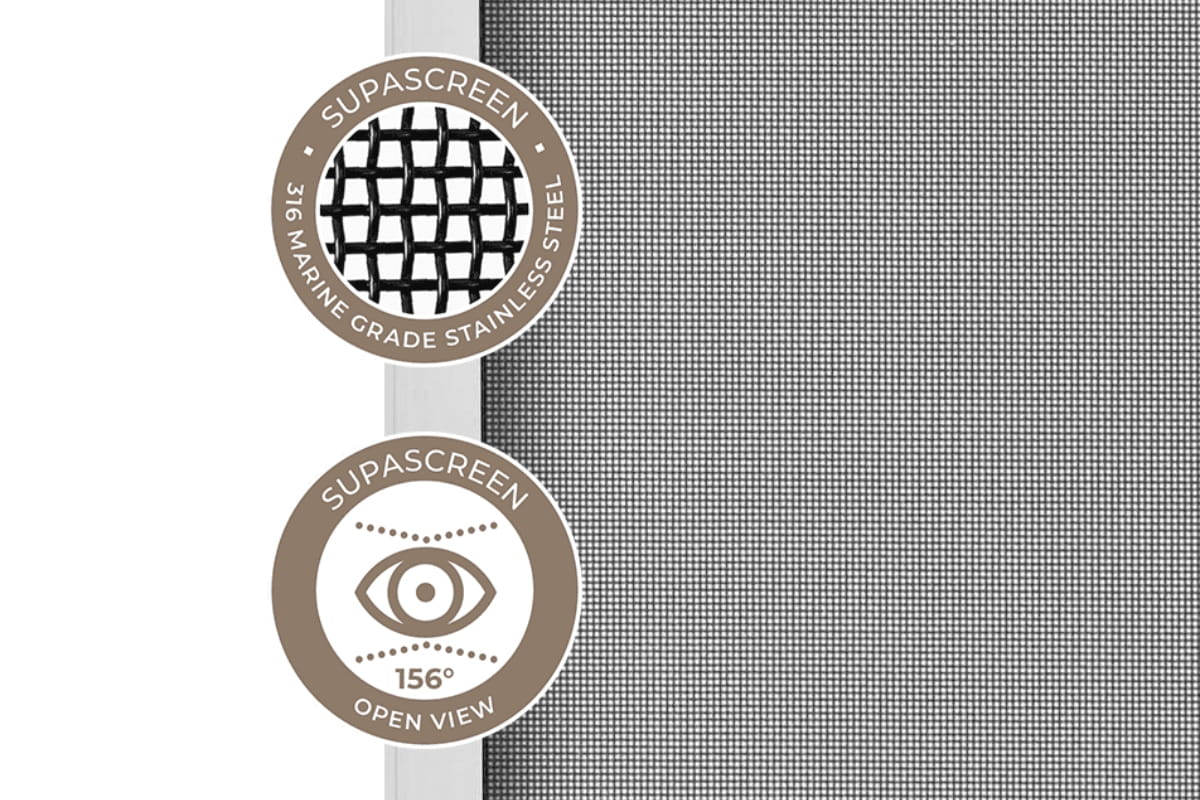
Many premium security doors are manufactured with 316 marine-grade stainless steel or perforated aluminium mesh. These materials are so important for your home security because they are highly resistant to cutting or forced entry.
Barrier doors are typically made with lighter materials, with diamond-patterned grills and decorative cast-type grills. Aluminium and stainless steel are the most common materials used. Because of their lighter construction, barrier doors cannot withstand heavy loads.
Frames
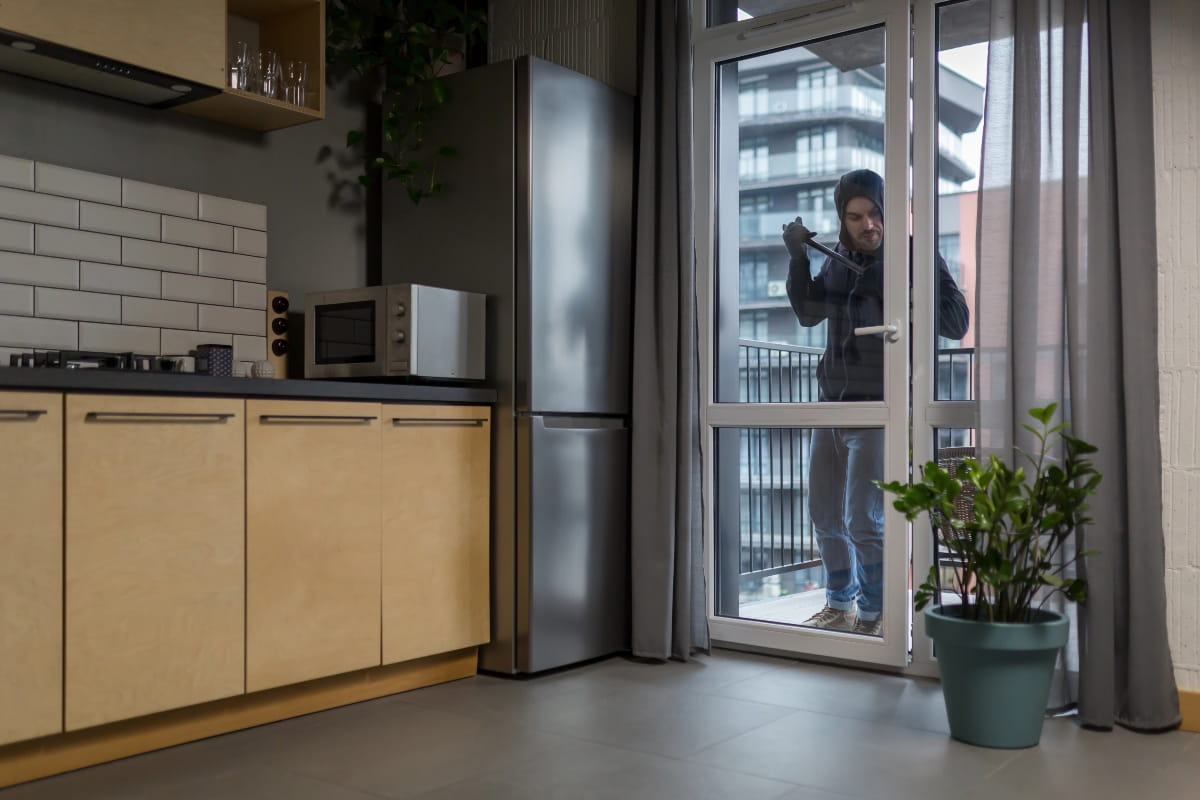
Security door frames are heavy-duty and reinforced with thick sheets of aluminium or steel. They have high structural integrity and are clamped deeply to prevent the mesh from being kicked or rammed out of position.
Barrier door frames are commonly made of aluminium as well, but often they are thinner and lighter. Their frames are made with riveted grills that are prone to inward buckling under heavy loads, and the lack of internal reinforcement means they can be bent with basic tools.
Security testing
Security doors must meet Australian Standard AS5039 and undergo rigorous testing, including knife-shear, probe, corrosion, forceful-pulling, and frontal-impact tests.
A barrier door does not have to undergo these tests because it is not a security door – its purpose is pest control and airflow.
Locks
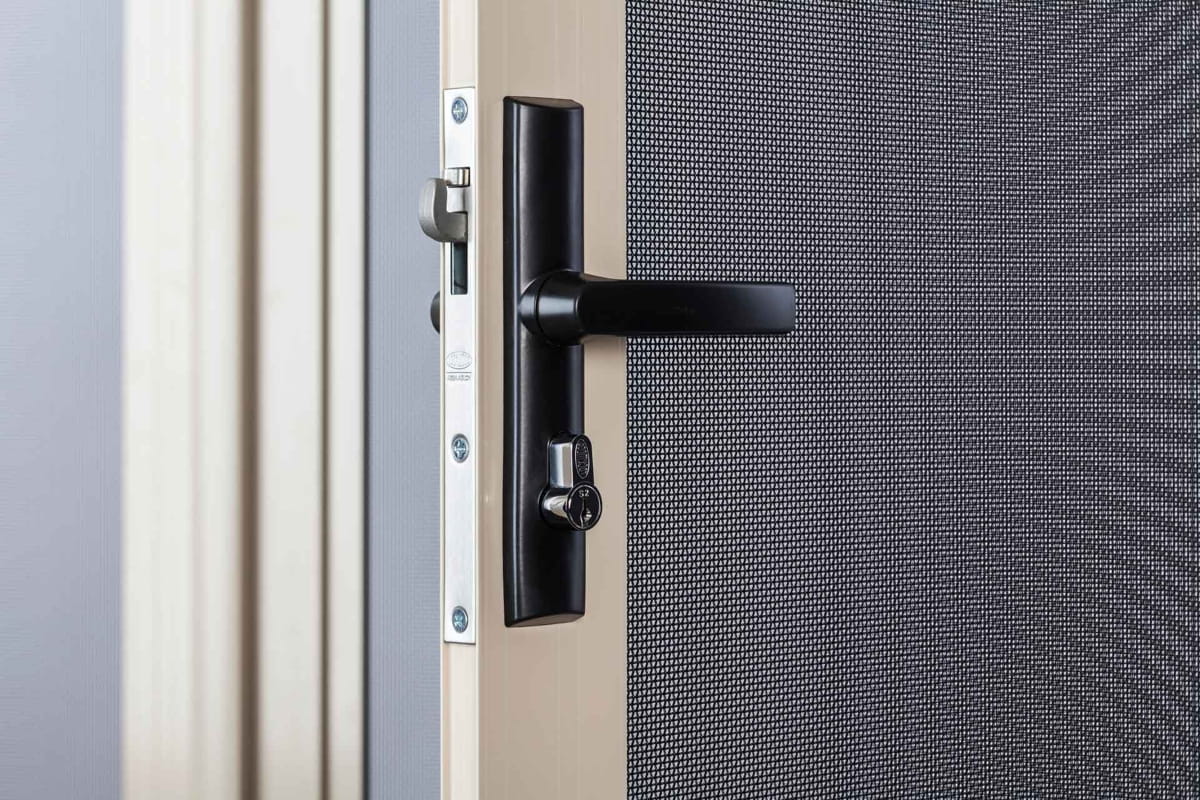
A compliant security door will have a 3-point lock, a locking system that distributes the load across three points on the entrance door, typically in the top, bottom and centre. A 3-point lock is likely to prevent the door’s top or bottom from being wrenched open and provides a high level of security.
Barrier doors have a single lock. These types of locks have the strength to deter against opportunistic theft, but not against jemmy tests (break-in simulators in which the thief possesses a lever or screwdriver).
Hinges
Security doors should be fitted with tamper-resistant hinges, such as fixed-pin hinges, to reduce the risk of the door being lifted or pried from the frame. Under AS 5039, hinge points are tested as part of the door’s overall forced-entry resistance, and hinges with pins must not be removable. Recessed hinges or hinge filling can also help limit access for jimmying.
Barrier doors generally use lighter-duty hinge systems and are not required to meet the same security testing as compliant security doors. While they may suit airflow and insect protection, they should not be relied on for the same level of forced-entry resistance.
Infill anchoring
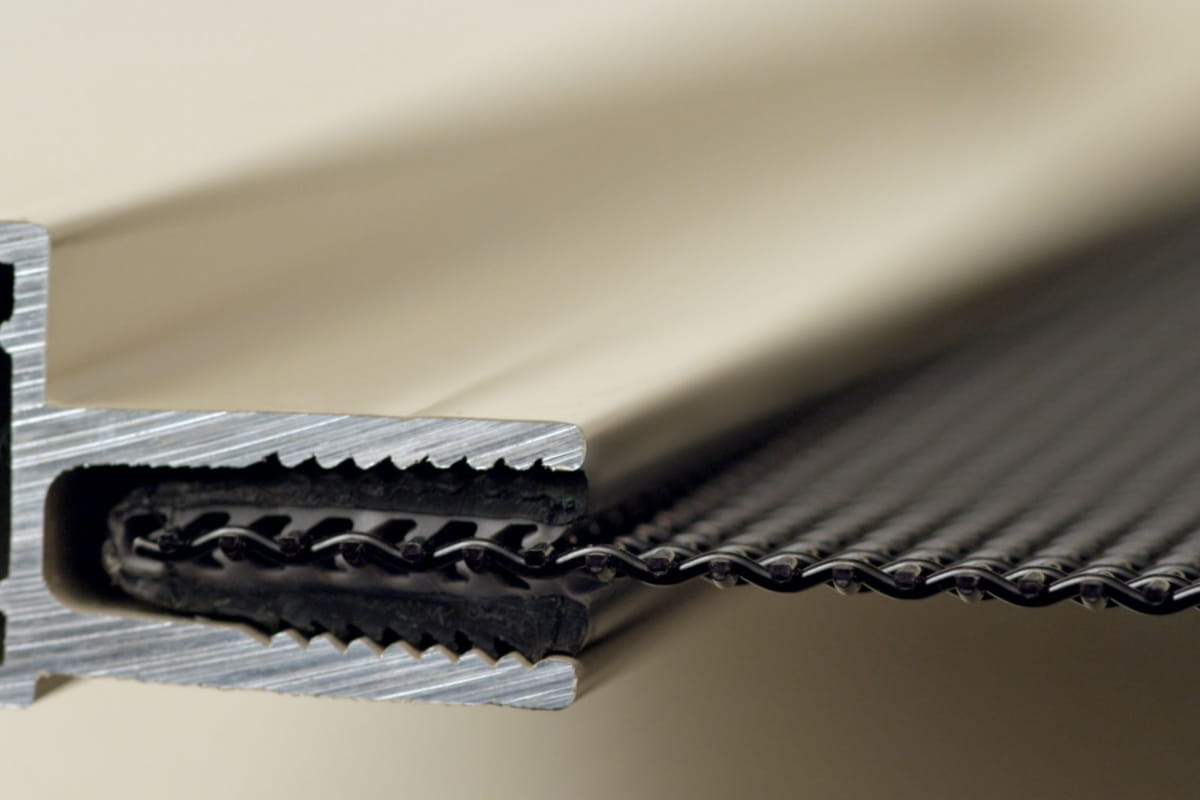
In compliant security doors, the mesh is secured into the frame using a tested retention system designed to resist impact, pulling and forced entry. Depending on the product, this may include clamping, pressure-fit systems or other proprietary methods that help keep the mesh firmly in place.
Basic barrier or flyscreen-style safety screen doors often use lighter mesh held in place with a rubber spline, similar to a standard flyscreen. This type of mesh is generally designed for airflow and insect protection rather than forced-entry resistance, so it is easier to push, cut or remove than the tested mesh systems used in compliant security doors.
Cost
In most cases, quality security doors that comply with Australian standards will be more expensive than barrier doors. This is because they are made and installed with materials that can withstand forced entry, so they will undoubtedly be more costly.
Barrier doors are often simpler to install, while compliant security doors should be installed by a licensed provider. In Western Australia, only installers licensed by WA Police can install security doors.
Light and visibility
Because security doors use high-tensile 316 stainless steel, the wire can be thinner while remaining stronger, providing a clearer view and improved airflow than the thicker grilles found on cheaper barrier doors.
Durability
Security doors offer superior durability to barrier doors. Not only are they made of materials that resist forced entry, but they are also corrosion-resistant. For those who live along WA’s coast, security doors will withstand oxidation from salt and wind far longer than a barrier screen will.
The Amplimesh SupaScreen® security screens are backed by a 16-year warranty. This reflects the expected durability and long-term performance of a quality security door.
How to check if a security door is compliant
- Ask for confirmation that the product meets AS5039
- Check whether the installation meets AS5040
- Ask whether the door has been tested to AS5041
- Check if the installer is appropriately licensed in WA
- Ask for product documentation, warranty details and brand information
When might a barrier door be suitable?
- Low-risk areas.
- Internal courtyards or protected patio areas.
- Homes where airflow and insect control are the main priorities.
- Secondary doors that are not exposed to the street.
- Budget-conscious upgrades where security is not the main concern.
When is a security door the better choice?
- Front doors and street-facing entries
- Back doors
- Laundry doors
- Side or rear doors with hidden access
- Homes in exposed or high-traffic areas
- Homes with children, pets or vulnerable family members.
- Properties where you want airflow without leaving the main door open.
- Coastal homes needing stronger corrosion resistance
Security screen doors: What is the right choice for your Perth home?
It’s all dependent on your needs and budget. Whether you live along the coast or deep in the city, in a low or high-crime area, alone or with a budding family, it’s all about what will set your mind at ease over the security of your home.
At Central Screens and Locks, we offer solutions to all your door and window needs. We offer expert locksmith services and install security doors to the highest standards, so you can leave your home without worrying about its safety.
If you’re looking for security screens in Perth, Central Screens and Locks is here to help. Contact our team to see what security door meets your needs.


